Thursday, October 27, 2016

Michael Tartaglia 10/27/16

Today our class continued to watch Wall-E and we continued to answer questions and provide the questions with evidence and to connect it with Ready Player One on the google classroom post labeled #F07: Cli-Fi Watch Along. Mr. Rivers has reminded us to make strong questions.
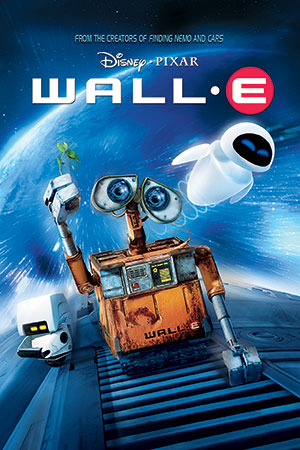
Wall-E is the last of its robot kind to be working on cleaning Earth while the human civilization is on a luxurious spacecraft. In the next bit of film the captain of the ship sends a robot named Eve which stands for Extraterrestrial Vegetation Evaluator to look for life on Earth. Eve is to look for any signs of life as this would mean that Earth is ready to have people live on it again. When Wall-E spots Eve's arrival his curiosity was stimulated. He followed her everywhere without actually meeting her until his friend (a bug robot) does it for him. Eve and Wall-E meet and they spend the day together. When a storm approaches Wall-E brings Eve to the back of a truck with all of Wall-E's things. This is Wall-E's home/room where he takes shelter when storms come about. Wall-E shows Eve everything of his and even the little plant he found. When Eve analyzes it, she puts it inside her storage and shuts down. After a few days the humans send a ship to retrieve her. Wall-E runs after her and climbs onto the ship. Their is obvious chemistry between these two robots as they both are shown caring for each other. This film connects to Ready Player One because of the genre being Cli-fi and that both worlds are polluted. Cli-fi is becoming popular among young children and is conveying a message of climate change and that people need to care about the planet we live on.




Wednesday, October 26, 2016

Shelby Vermeulen ~ 10-26-16

Image result for wall e
Today our class watched part of Wall- E and answered the google classroom post labeled #F07: Cli-Fi Watch Along. Wall- E stands for Waste Allocation Load Lifter Earth-class. He is the last robot left on Earth, and spends his days cleaning up the planet, one piece of garbage at a time.The part of Wall- E we watched today, was mostly no speaking and more sound effects and music. However, he could easily be understood based off of the sounds he made and his body language. The opening song that introduced us to the movie was "Put On Your Sunday Clothes" sang by Micheal Crawford (https://www.youtube.com/watch?v=ZdTx0IZUvgY).  While watching Wall- E we examined specific pieces of evidence and composed a strong question based on the evidence we found. We also were asked to relate the evidence we found to Ready Player One. Mr. Rivers also reminded us to avoid guesses/opinion questions, yes/no questions, questions that the film itself answers, and questions without a specific piece of visual, textual, or narrative evidence. 

Wall- E and Ready Player One are very similar in the fact that they both can be categorized under cli- fi. Cli- fi brings to light environmental issues and is becoming widely popular among young readers. 

10/26/16 Sarah Veasey

Today in class, we watched a movie! Well that wasn't the only thing we did today, Mr. Rivers reminded us first that our groups and overall podcast ideas should be done by November 9th (that's still about 2 weeks away). To find the calendar that gives the dates of the podcasts, use the link below.  https://docs.google.com/document/d/1ANciwM4rpuOx6CfUC6XoRIWkqY5oEOLCi_oI1AUhltM/edit
Our class watched the film Wall-E, so that we can use that movie as a comparison to the book we are reading, Ready Player One. Mr. Rivers had us go onto Google Classroom and hand in an assignment, where we had to come up with a strong discussion question dealing with the film. The assignment said to avoid questions such as guesses/opinions, yes or no questions, questions that the film itself will answer, and questions without a specific visual, textual, or narrative evidence. We were also told to keep an open mid about the film, because although it was a Disney film and most of us don't seem to watch many G rated films anymore, we were told to try and enjoy the film. The class ended in watching the film, and answering the question on Google Classroom.

Tuesday, October 25, 2016

10/25/16 Brianna Perfetti


       Today we examined podcasts data that we've recorded the day before. Then answered the questions about the podcasts on Google classroom. We discussed with our groups after your research time. We discussed as a class how we can make sincere improvements and what did quality podcasts do. As a class, we said to make sincere improvements is to be organized and plan out what you're going to say, also be creative by adding music and having an introduction. We also said to have a quality podcast we could use evidence such as reading the book quote out loud and having specific parts of the film, using your phone to record also improves the sound quality of the recording, and conversing with each other back and forth.

Monday, October 24, 2016

Jack Valentine 10/24/16

Today in class we continued our lesson on podcasts.  Relating it to what we have recently analyzed we were asked to create a sample podcast.  In the near future we will have to create podcasts for both Ready Player One and our independent film club movies.  Creating these podcasts forces each student to work on many of the skills which we have been recently taught.  This includes "probing evidence" from each subject and effectively discussing it in the podcast.  In addition to properly using evidence by creating a unifying idea.  The unifying idea should link each subject to each other to create a constructive discussion.

After discussing the keys to podcasts and how we will be using them, Mr. Rivers directed us to create our sample podcasts.  These were not given a grade, however allowed each student to practice creating podcasts so that it would better prepare them for graded assignments.  We were introduced a free online website called vocaroo.com.  This website allows us to record our podcasts for free online.  We split up into our groups in which we sit with to record our discussions.  Next we were asked to discuss the relation between the article we read on Friday, Wall-E, and Ready Player One had  in relation to the Cli-Fi genre which was introduced in the article.  This allowed us to practice the skill of robbing evidence and creating a unifying idea.  Once completed with our discussion, vocaroo.com allows us to share our recording via link.  We were then asked to share our group, unifying idea, and link in a classroom document.

Helpful information: Podcast Due Date Calendar 

Class today was useful in that it gave each student the opportunity to practice podcasting before having it be graded us, better preparing ourselves to receive a strong grade once given a graded assignment.

Here is a sample podcast from my group....

Vocaroo Sample Podcast Discussion

Vocaroo.com


Joanna Muino 10/24/16

Today in class, Mr. Rivers had given us more information regarding out podcasts that we must record as a group. our podcasts are about four movies that we have to watch along with a book. All of the movies and the book have aa similar idea linking them to our unifying idea. Once a week we will have to read a quarter of our book along with one of the movies. After Mr. Rivers gave us this information, we were told that we had to record a practice podcast with our groups. The podcast had to relate the two minute clip we had been shown from Wall-e and the book we are currently reading, Ready Player One. Each group had about ten minutes to brainstorm before recording their ten minute podcast. During the podcast, each group was to integrate evidence from Wall-e and Ready Player one regarding setting or genre. also to probe evidence through questioning. The website used to record the podcasts was Vocaroo.com or students could use their phones using the voice recorder app. Voracoo.com was helpful because after you finished recording it gave you a link so that you could share your podcast. Today's class was helpful because it gave us an example of what we are going to have to do with our groups for the podcast about the book and movies.

Saturday, October 22, 2016

Brooke O'Malley Blog post 10/20/16

Today in class, we learned what a good discussion question consists of. We reviewed questions people asked about the first two minutes of Wall-E. Our class determined which questions were good questions and which were bad questions and which were somewhere in between. After deciding the strength of each question we answered the questions based on the evidence provided. After discussing each answer we were then able to further determine the strength of each question and take this into consideration when rating each question again. Some groups’ ratings changed and some didn’t.

Friday, October 21, 2016

10/21/16 Claire Vreeland

Today, since Mr. Rivers was not in class, we did an individual assignment in order to establish a relationship between the pieces of literature were focusing on. We read an article called Climate Fiction- Can Books Save the Planet?. The article discusses the fact that with evolving generations, Climate-fiction, or Cli-Fi, is becoming a big aspect of movies and televisions series, today. The article mentions that cli-fi is quickly becoming a topic that is appreciated and favored by high-school and college students. The text states "The Tyndall Centre study also indicated that placing climate change in a fictional context might reduce the urgency readers feel about the issue in reality, or simply reduce it to a vague concern with no practical remedy" (Ullrich). This quote exhibits the main reason as to why this type of literature is so important now and how it hopes to change the outlooks of its audiences. After reading the article, we had to apply the context of it to questions about Wall-E and then to our book Ready Player One. The first question asks "How does Wall-E fit into the category?", the next one asks "how does Ready Player One?", and the last one asks "Why does ullrich think these texts are important?".

http://www.theatlantic.com/entertainment/archive/2015/08/climate-fiction-margaret-atwood-literature/400112/


10/21/16 Maeve McVeigh

Today in class we read an article regarding Climate Fiction. The article was called Climate Fiction: Can Books Save the Planet? written by J.K. Ullrich. The article examined the benefits of Climate Fiction and how it can help in many circumstances. After we completed the article, we were tasked with answering a few questions on Google Classroom in a paragraph. The first question asked to discuss how Wall-E fits into the category of Climate Fiction. Wall-E examines what the Earth will be like after humans have polluted and destroyed it. The second question asks how Ready Player One does the same. The following question, asks why Ullrich thinks Climate Fiction texts are important. Ullrich states Cli-fi "presents bleak visions of the future, but within such frightening prophecies lies the real possibility that it’s not too late to steer in a different direction". Cli-fi is intended to inspire humans to change their ways to prevent these fiction stories from becoming a reality. 

http://www.theatlantic.com/entertainment/archive/2015/08/climate-fiction-margaret-atwood-literature/400112/

Thursday, October 20, 2016

10/20/16 Brianna Lamoureux

Today we started class by logging on to google classroom and taking notes. We talked about asking good questions that could probe evidence and lead to discussions. Mr.Rivers showed us good and bad examples of question that we wrote about the movie Wall-E. As a class we then ranked the questions from good to bad and tried to answer them. We got two minutes to answer each question, this allowed us to see how long we could talk about each question which showed the ones good for discussing. We also made lists of what makes a sentence good or bad. We then had to use these skills to write our own questions about Ready Player One's setting. Mr.Rivers reminded us about picking our films and book for our podcast as well.


https://www.youtube.com/watch?v=nLx_7wEmwms

10/20/16 Eric Lesch

Today in class we started by going over our objectives for today's class. There were two objectives. One objective was to evaluate a discussion questions ability to probe evidence. The key word is probe in that objective because we would use that word to really discover and bring evidence into what we were discussing in class. The second and final objective for today's class was to craft a strong discussion question based on a unifying idea. Once the objectives were acknowledged, Mr Rivers provided us with three questions on the board. We were then told to discuss with our groups which questions we thought were bad questions and which we thought were good questions. The three questions we were given were:


  1. Why did the film choose to start in space so far away from the first place we see any type of character?
  2. Does this take place on Earth?
  3. How did the planet get destroyed?
Many of the groups made up their minds at this point which the worst question and which was the best question. But we were now told to answer these questions within our groups and see if our opinions changed on these questions. After we were done discussing which were the good questions and which were the bad questions, we tried to establish specific characteristics of a good question and a bad question. These are the results.

Good Questions: 
  • Are open ended - multiple perspectives
  • Include details/evidence - IN THE QUESTIONS
  • Use good verbs
  • More specific - relevant details
  • Close reading- mis-en-scene- literary analysis
Bad Questions:
  • Very obvious - straightforward
  • Obscure what you're really trying to discuss
  • Create guesses
In this class we learned how to create well developed specific questions to rally make our podcast interesting to listen to.
Image result for podcast

10/20/16 Terrell Smith

Today in class, the class talked about good questions, and bad questions. We analyzed the good and bad questions that we made yesterday. Second we analyzed what makes a good question good and why. The class discovered that to make a good question your question needs to be specific, and have good verbs in it. A good question should not have a answer that ends in yes or no.

Tuesday, October 18, 2016

10/18/16 Juliana Oelkers Blog Post

Today we started class with writing our objectives in our notes. Our objectives were to be able to interrogate a text to provide strong discussion questions and evaluate the quality of a text based question. We also talked about how our class film club should combine both the text and film. Additionally the club should include conversations that show analysis of the texts and various interpretations of a unifying idea.
A unifying idea brings both texts together as one and we used setting as an example in class. Also, we discussed how interrogative questions can help propel conversations forward. Next, we talked in our groups and concluded that good questions are detailed and specific, explore all angles and perspectives, push the truth, and lead to more questions.
In order to practice writing good questions we watched the beginning clip of the film Wall-E. The clip showed how Earth was deserted by humans and how a robot compressed garbage into squares and piled them up stories high everywhere. Next, using interrogative questions, our groups wrote one good question about the clip and one bad question. Finally we posted our questions on google classroom.
Image result for wall e
https://www.youtube.com/watch?v=nLx_7wEmwms

10/18/16 Katie Hastings

Today in class, we began with our objectives-  interrogate a text to provide strong discussion questions, evaluate the quality of a text-based question. These objectives relate to our upcoming project with the mini film clubs. Our film clubs will combine text and film, have conversations that show analysis/argument of both, include various interpretations of a unifying idea (setting, characters, genre, plot, etc), and learn how to structure a podcast.
Today, we focused on the unifying idea of setting. In order to explore an idea like setting throughout films/books, we need to ask questions. Mr. Rivers put up a slide that described the types of questions we should be asking. It said that our questions should “Propel conversations by posing and responding to questions that probe reasoning and evidence; ensure a hearing for a full range of positions on a topic or issue; clarify, verify, or challenge ideas and conclusions; and promote divergent and creative perspectives.” As a class, we analyzed this and put it into our own words. So, more simply, our questions should ask and answer, encourage deeper conversation, explore every angle of a topic, challenge ideas, push the truth and bring in evidence.
 To practice asking these questions, we watched a short clip of the WALL-E introduction. Then, in groups, we came up with good questions to ask (relating to setting) using who, what, when, where, why and how. We were asked to include 1 bad question, like “Who is the character?” Then, we focused on making the other questions more interesting and deeper.

Video: https://m.youtube.com/watch?v=nLx_7wEmwms

Monday, October 17, 2016

10/17/16 Devin Gozdenovich

In class today, Mr. Rivers introduced to us the new unit we are starting. Over the weekend, we listened to podcasts to be introduced to them. We discussed in our groups the similarities and differences between the ones we listened to. He then went into detail about what they are and how they're used. We discussed as a class about the similarities and differences of different podcasts. We cam up with a few for each. For similarities, there were that all podcasts lack visuals and it is just people speaking. This made the speaker have to use their tone and description to really put their point across. Also, a lot of podcasts have guest speakers and appearances to either enhance their podcast or to gain more popularity by having celebrities make appearances. There were quite a lot of differences, but one major one was there are fiction and non-fiction podcasts. Some are stories that have characters and a plot and setting, but there are also ones that are just teaching the listener about certain things, or having the listener almost sit in on a discussion. Then Mr. Rivers gave us an assignment that we will be working on for the next few weeks. We will be creating our own podcasts in groups. The group had to chose a genre or topic that four movies and a book have to relate to. We have to read and watch all of them and then make a podcast on each. This will be decided later on in class.

10/17/16 Dianna Oelkers Blog Post


We started off the class today by discussing with our groups what podcast each of us choose to listen to. We each talked about all the similarities and differences that exist across each persons podcast. Some of the similarities within each podcast included talking and listening without viewing the actual people speaking. Another similarity was guest speakers came on podcasts, so the host could either interview them or discuss a topic with them. And the last similarity was, multiple people found that not being able to have visuals makes the host of the podcast have to describe things more in depth. The difference between each persons podcasts was that some hosts talked about fictional things and some talked about nonfictional things. Then after we discussed each others podcasts Mr. Rivers passed out a book we will be reading called Ready Player One. Then we went onto google classroom and looked on the speaking and listening standards doc. This was a slideshow and each of us had to pick one slide. On each slide there is a question and whatever one you choose you have to answer regarding the podcast you listened to. After this Mr. Rivers introduced the next project we will be doing. The project is for us to get into groups and make a podcast. In the podcast we have to discuss a movie that we are passionate about.

Friday, October 14, 2016

10/14/16 Brianna Perfetti

      Today in class we reflected on our Intertextuality essays. We unsubmitted our essays on google classroom to evaluate the product of our writing and add 10 comments about the essaay. We also learned what high water mark and low water mark was according to writing. High and low water marks are the highest and lowest point of your essay, meaning the best and a part that you can work on more in your essay. We referenced the Expository checklist to find the high and low water marks to the essay. We also spent the rest of the class looking for a podcast to listen to for homework and answer the question on google classroom after we listen to a podcast of our choice.

Thursday, October 13, 2016

10/13/16 Sean Drew

Today in class we got to breathe a sigh of relief. After almost 2 months, are essays were finally due today. But that didn't mean we were out of the clear just yet. Mr. Rivers had us go over his Expository Checklist, which he put up on his Google Classroom. After taking any questions about the essays themselves, Rivers had us read over our essays and use the checklist to the best of our abilities. He had us go back and change things to make it match the checklist more so that we could get the highest grade we could possibly get. And hey, who doesn't love high grades? The checklist was a big help in constructing the final draft for the essays.

10/13/16 Maeve McVeigh


The majority of class today was spent finalizing our Intertextuality Essays, as today is our last day to work on them. Mr. Rivers uploaded a PowerPoint called Expository Checklist to utilize while reviewing our drafts. This was a very helpful source in how to improve our essays. Each slide focused on a different component of an essay. The first focused on the content of our essay. This slide helped to ensure that throughout our essay we use specific evidence from each source in each body paragraph. This slide was beneficial for me while reviewing my essay, because certain body paragraphs lacked evidence from one of my sources. The following slides focused on Organization, Voice and Style, Presentation and Research and Citation. Research and Citation was one of the main focuses during class today. Multiple students were asking Mr. Rivers if their works cited was correct and if they were citing their evidence correctly.  After using the Expository Checklist, we were then required to answer questions on Google Classroom regarding our essays. These questions were, 1: Which question best helped YOU improve your paper? 2: How did it help your paper? While working on our essays, Mr. Rivers displayed a timer that was counting down to 11:59 p.m. that had been posted on Google classroom. It mainly struck fear in the students eyes, as we all had a realization that there were only so many hours left till we had to commit to submitting our Intertextuality Essay after weeks of preparation. Overall, class was spent making final touches to our essays while we anxiously await the strike of midnight when (hopefully) all our essays will be completed and turned in.  

10/13/16 Joanna Muino

During todays class, Mr. Rivers helped guide us students to the end of our intertextuality essays by giving us an expository checklist. This checklist had questions such as how well does your essay establish its structure/ ideas through your thesis statement and how well does your essay apply specific film & literary terminology to further analyze evidence. These questions were helpful to guide us to make our essays the best they could be. We were then asked which one of the questions on the expository checklist helped us the most when it came to improving our essays. Mr. Rivers also showed us a countdown until 11:59 to show us how much time we have until our essays that we have been working on for weeks are finally due. The rest of the period we had time to work on finish our essays to make them as good as possible as Mr. Rivers walked around to answer all the students questions. This was a very helpful period because it made it easier to improve and better our writing by being able to work with a teacher giving us pointers on how to improve our writing styles.

10/13/16 Sean Finnegan

A large sigh of relief  came over the class today because today was the day our intertexuality essays are due. The class as a whole today was relatively busy with some people fixing and adjusting last minute details and citations while others slowly realized they were going to have to write until 11:55 tonight if they're going to hand in this essay on time. This interesting chemistry of feelings in class was only intensified by Mr. Rivers showing the class a wonderful count down clock showing the exact amount of time until the paper is due. Although it did get a good chuckle from the class it was almost sarcastic as the deadline for this project become very real with that on the board. Personally the bulk of my essay was finished before I came to class today so all I really had to do was add a few citations and read over my essay one last time before handing it in. A relatively relaxing day for some but a brutal work filled one for others.

Tuesday, October 11, 2016

10/7/16 Jeremy Dericks


Today in class we began the period by talking about how syntax affects clarity and then we continued to work on our intertextuality essays.  Syntax is word order and word choice and how both can be used in writing.  We did an example of analyzing syntax by looking at a picture from a clip of The Office.  With the picture, Mr. Rivers also provided us a sentence to analyze.  The sentence read "This shot shows a nervous man."  We then used the 6 interrogative verbs (who, what, when, where, why, how) to try to find a way to make the sentence more specific.  Once each group was able to craft a new and more specific sentence, we all posted our group's comments on the classroom page.  As a class, we decided that the sentence "The shot shows the office manager Michael Scott and Dunder-Mifflin Paper Company nervously biting his lip," was the most detailed. Just by using those 6 interrogative verbs we were able to transform a very bland sentence into one that offer much more detail. We then watched a clip from the season 4 opening episode of The Office in which Michael hits Meredith with his car in the parking lot. Michael then calls for a brief staff meeting where he tells everyone that "Meredith has been hit by a car, the doctors did everything they could, but she is okay." The purpose of watching this, aside from getting a good laugh, is to analyze the effect of syntax. In this sentence, the syntax that Michael used makes the people in his office think that Meredith did not make it. We then spent some time discussing how even though Michael did not tell a lie, he used syntax to beat around the bush in an attempt to hide the fact that he was the one who hit Meredith with his car. After this discussion we then took the remaining class time to continue working on our Intertextuality essays. Mr. Rivers walked around the room answering questions and making suggestions to help students who were having a tough time getting their essay going.

Friday, October 7, 2016

10/7/16 Eric Lesch

Today in class, we discussed how syntax affects clarity . Syntax is the use of word order and word choice. We analyzed this topic by going over the 6 interrogative verbs (who, what, when, where, why, and how) and how they create specificity. As a class we looked at a picture on the board of Micheal Scott from the infamous T.V show, The Office. Mr. Rivers provided us with one sentence about the picture. The sentence was "The shot shows a nervous man". We then began to analyze the sentence in our groups to try and figure out how we can make this sentence more detailed and specific. Each group posted a comment on classroom of their new and improved sentence using multiple interrogative adverbs. As a class we decided that the sentence, "The shot shows the office manager Micheal Scott at Dunder-Mifflin Paper Company nervously biting his lip", was the most developed sentence using the interrogative adverbs. Just by going over the 6 interrogative adverbs we were able to change a very broad sentence to a very specific and detailed sentence. As a treat, Mr. Rivers showed us the clip from an episode of The Office, where the image was taken from. In this episode, Micheal runs over Meredith and has to let the rest of the office know that he did it. Micheal does this by being very broad and not specific making it hard for the office to understand what happened. The hilarious clip, shows us that the use of syntax and specific adverbs really helps when trying to discuss in detail about a topic. After we had a good laugh and finished discussing the clip, we dove back into our Intertextuality Essays and tried to take one sentence that we felt could be improved on with the use of syntax and make it much  more detailed and specific. Then, the bell rang.

The clip we watched in class:
DISCLAIMER the clips linked below are taken off Youtube and are not the best quality. It is not the entire clip we watched in class, but it should give you a feel of what we watched in class.

Meredith getting hit:
https://www.youtube.com/watch?v=lqivZzA2dvY

Micheal trying to explain the incident:
https://www.youtube.com/watch?v=GFn5vD0HDKk


Thursday, October 6, 2016

10/6/16 Brianna Lamoureux

At the beginning of class we logged onto Google classroom and started by going to turnitin.com and signing up for Mr. Rivers class. We showed him we did this by turning in a sample paper and submitting yes to his question asking if we completed this task. We did this to help prepare us for the future when we have to turn in upcoming assignments. Next on Google classroom we all responded to another question asking about what are plans were for writing our first essay. He asked what our goals were considering there is only  a week left before it is due. This helped me plan out the rest of my essay to ensure I don't try and get it all done in one night. This could be helpful for students with time management and also showed Mr. Rivers how efficiently people are working. For the rest of the period we continued to work on our essays and ask questions. We were encouraged to use the many helpful resources like a sample paper that a student had written. This would help us with the flow of our paper. Students could either continue writing, catch up on reading or gather quotes. At the end of the period we were asked to revise our previous response on Google classroom saying whether we reached our goal or not.


Sample Paper: https://docs.google.com/document/d/1GT79xhhRcCkmeI3oBk8RlQKZDvpQJb8Dr0slqGHg5Bw/edit

10/6/16 Jacey Deleu

During today's class we started off by going to our google classroom page and signing up for turnitin.com and submitting a sample document. So that way when we hand in our intertextuality essay we will already know how to submit our paper into turnitin. Once we went finished that we will out a survey on our google classroom page saying that we successfully completed that. After that there was a question posted to google classroom asking what are plans were for our essay over the next week and what we wanted to accomplish during the class period. I think this was an effective way to put students into reality check with how far along they are with the essay process and what steps they need to take to submit a good paper. Then we got to work with drafting our papers or gathering any information we need in order to put our essay together. The class time also allows students to ask any questions or any help they need from the teacher. We continued to work on our essays for the remainder of the period. Before the bell rang Mr. Rivers asked everyone to go back to google classroom and edit their response about their goals for the class period and respond saying if we achieved our goal for the class period.
An example of what we were asked to complete during class

Wednesday, October 5, 2016

10/5/16 Katie Hastings

Today in class, we analyzed a sample senior paper, called The Grander Gatsby. As a group, we answered questions about the content of the essay. First, we noticed the MLA format, a feature we will be implementing in our own essays. Then, we answered questions like "What do you like about this thesis statement? What would make it stronger?" and "How does this topic sentence connect to the thesis statement?" We also looked at the evidence, and how the analysis of the evidence connected to the topic sentence. After picking through the sample essay, we turned to our own thoughts and ideas. As a class, we are beginning to craft our senior papers. Today, we continued to think about points of interest in our books/films. These could be similarities, differences, or other observations in our books/films. Mr. Rivers answered many questions the class brought up about what to include in our essays. We determined that trying to fit in every similarity and difference would be too much. Instead, we should focus in on one character, event, setting, etc. and expand. This way, we can really focus in on how film differentiates from text.

The Grander Gatsby:
https://docs.google.com/document/d/16OXPZbnhn101C62iux-XmdEAEM0Ily8A5Y9ZC25WUOM/edit

Tuesday, October 4, 2016

10/4/16 Ben Curras


Image result for quote analysis
Today, in class, we reviewed where the quotation should be placed in a paragraph and Mr. Rivers explained the “flow of quotes in an essay” through the acronym; ICA. ICA stands for Introduce, Cite, and Analyze. Introduce is used to show context and show the setting and actions behind what is said. Mr. Rivers also stated to remember to balance the clear and specific details. Cite is to credit the information where after the quote and when the sentence is finished, the writer adds to the sentence in parenthesis, (Film Title/ Director’s Last Name). Just a reminder, but both I and C should be in the same sentence whereas A is after the quote. Analyze is when the writer shows evidence connecting the quote to the topic sentence and why the specific quote was used. This is a prime example of the concept of intertextuality Mr. Rivers has been explaining recently. Intertextuality was defined as the relationship between texts where in this situation, we will be analyzing the relationship between the book and the movie of the same story. After all of this information was explained, the class read over a paragraph written by Student McStudentface, where the students, in their groups, analyzed the paragraph and gave a brief explanation to Mr. Rivers in a discussion of what we liked and/or disliked from the reading. For example, in my group, we believed that the paragraph did not flow well. We could not understand where the quote was coming from meaning it was not very specific and lacked the clarity. The analysis was also lackluster as we needed to inquire Mr. River’s explanation as to what the writer was trying to get at.

10/4/16 Devin Gozdenovich

In class today, Mr. Rivers started off by reviewing how to properly include quotes in our summer reading essay. He described the process as ICA. I stands for Introduce. At the beginning of the sentence before you evidence, you introduce your quote and blend it into the evidence, making it seem like it was not just pasted into your essay. Next is C, and that stands for Cite. This means that you use the correct citations in your essay, whether it be in APA or MLA. The parenthetical reference needs to be at the end of the sentence, and not at the end of the quote. Also, you need to make sure your citations on the Works Cited Page is correct. For example, the citation for a movie would be Film Title. Dir. First Name Last Name. Container, Distributor, Year of Release. These two components should be accomplished in one sentence. It should be quick and be no longer than the one sentence combined. Next would be the A, which stands for Analyze. In the next however many sentences necessary, you need to explain why your evidence is relevant to your essay, and connect it to your topic sentence. After he went over this, we went on to read a sample paragraph about intertextuality from a past student in our groups. We discussed how the student used ICA to create a good argument in the essay and how well they used it. Mr. Rivers then went to each clump and discussed with us about what we found and discussed about.

Image result for movie works cited

Monday, October 3, 2016

10/3/16 Mike Freeman


Today in class we began by pulling out our notebooks and computers. Then you asked us if we know any differences between MLA format and APA format. You split up into two columns and showed what format you would use for what kind of topic. How MLA is the most common for us now. Although, you said APA will be very important in college. APA is used for Science, math, and U.S Battleships. Our Upcoming essay we will be using MLA citation.
MLA Citation
Author. Title of Source. Title of container, Other contributors, Version. Number, Publisher, Publication Date, Location.

At the end of class you briefly told us about ICA which stands for Integrate, Cite, Analyze.

Image result for MLA citation format

10/3/16 Mikey Botta

10/3/16

Objectives: effectively integrate written and visual evidence. Extract the most important details of a text.

Today in class, we went over various aspects of citations. There are two styles: MLA (Modern Language Association) and APA (American Psychological Association). MLA is typically used in english, religion, and philosophy. APA is used in most other areas-- science, math, history, etc. and is thus found more commonly outside of school. For our upcoming essay, we will be using MLA format.
The general format for a text in MLA format is as follows:
Author. Title of Source. Title of container, Other contributors, Version. Number, Publisher, Publication Date, Location.

For a film, the following is the format in MLA style:
Film title. Dir. First Name Last Name. Container, Distributor, Year of Release.
Alternatively, you could place the name of the director first, followed by the film title.

As an example, we created a citation for No Country for Old Men.
No Country for Old Men. Dir. Ethan Coen and Joel Coen. Netflix, Paramount Vantage, 2007.

Image result for mla 8

Towards the end of class, we began to discuss ICA, which stands for Integrate, Cite, Analyze.

Introduce: lead up to and prepare the audience to read the evidence. It shows why the evidence to follow is being included. Introductions can be very specific and include lots of details, or be pretty general and basic. 
Cite: to give credit to the source of the evidence. It is at the very end of the sentence, it is tied to all end punctuation.
Analyze: to connect evidence back to the claim.