Thursday, December 22, 2016

12/22/16 Eric Lesch

Everyone had their podcasts ready to go for today's class. Today was the big day, the big summative podcast. Our final podcast with our Mini Film Club. But due to many absences, we will be doing our final podcast the week we get back from break on Friday. During today's class we had a relaxing day before we went on break. We started off the class by filling out an exam online that used our interests to test us on common English topics like grammar, punctuation, etc.The website is called no red ink. It is a very interesting way to test people. Maybe we could use this idea and use it towards more important educational exams in the future. It would make it a lot more interesting to do reading and writing problems on topics you are interested in, rather then the usual boring topics like dress code and other school related topics. 

Here is a link if you want to check the website for yourself:  www.noredink.com

After the practice exam, we watched the Christmas Party episode from the TV show "The Office". It was absolutely hilarious, and was a perfect episode to watch before the holiday break. We had to write certain themes about the episode relating to Christmas, but most of the time we just sat and laughed at the beauty that was this episode.

Here is a clip from the episode we watched to give you an idea of what it was about: 
https://youtu.be/klwVaAa_8YA 

Wednesday, December 21, 2016

James Lynch 12/21/16

James Lynch
Mr. Rivers
CP English 11
12/21/16
Blog
Today in class, we kicked off class with an astonishing talk about what happened in the chapter six of The Great Gatsby. We talked about good fortune and bad fortune throughout the book. After this we broke off into our lovely groups that our lovely teacher, Mr. Rivers, chose for us. In these groups we chose four event/quotes from the story of Gatsby’s youth and plotted Gatsby’s status during each event. After this we talked about whether Gatsby embody the American Dream or not. And then we talked about what the depiction says about the American Dream. We then got back the sharing what each group got as a class. We talked about how Jay Gatsby started from the bottom of status, with not a lot of money, and earned his way to the top of status. He had bad fortune growing up due to his poor legacy of unsuccessful and shiftless farm parents. Image result for gatsby farm parents
Gatsby used to be a clam digger, and our class disgusted why the fact the he was a clam digger made him at the bottom of status. After we talked about that, we talked about how he made it to the top, just like Drake.

Joanna Muino 12/21


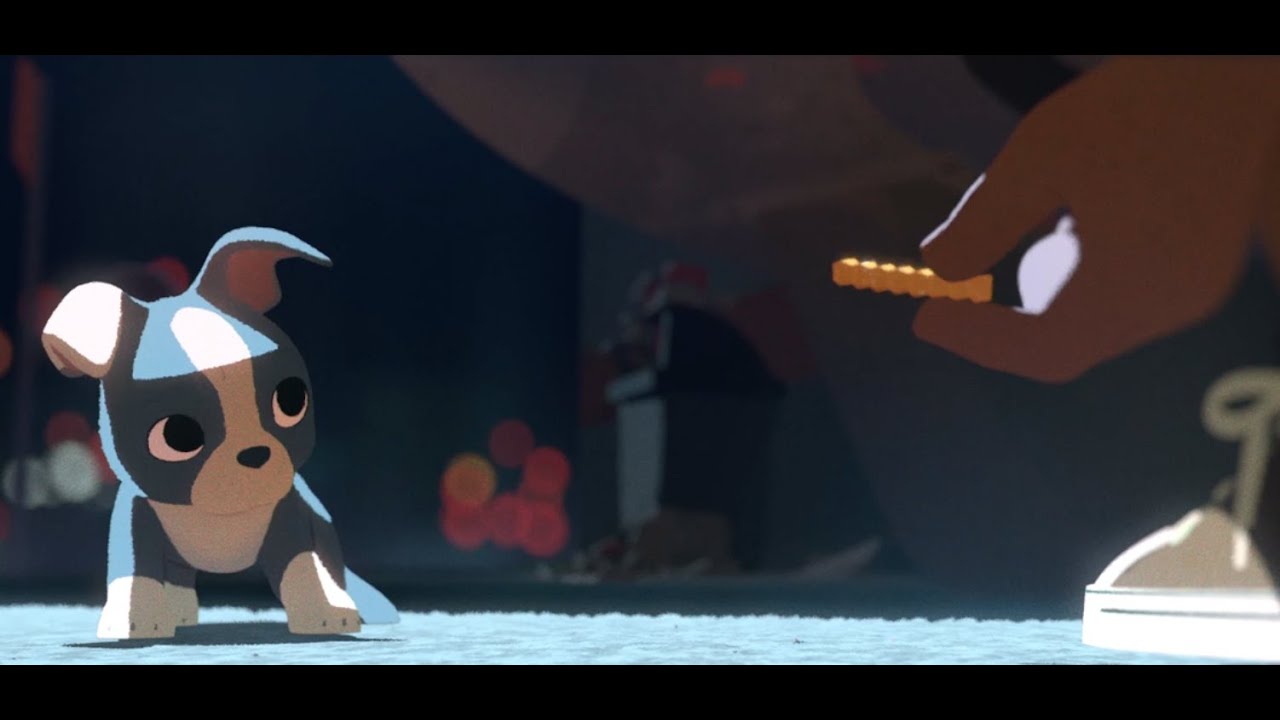
For the past few days in class, we have been discussing how to properly write a film review. As a class, we have been constructing a review of the Disney short film, Feast, a movie about a puppy who is homeless eating people’s garbage off the street who then found by his owner who eats a very unhealthy diet that he then shares with Winston. The owner then tries to change his ways but ends up going back to the same unhealthy diet, Winston notices and goes back to the owner’s old love interest to help save the owner. Winston’s plan works and not only saves the owner but saves the owners relationship and reunites their love. By the end of the short film the owner and his love had gotten married and had a child who also loves to feed Winston their same human diet. As I mentioned before, the past couple of days we had been constructing a review of this movie, today we started to put the whole thing together. Each group had to come up with a theme and discus what elements of the movie correlate to this theme. Mr. rivers provided us with an example review (Shown below) to help give us an idea of what kind of review we want to be writing. Within our groups, we had to create a paragraph revolving around the theme that we had come up with. After each group constructed their paragraphs we placed them on a document and the class voted on which paragraph deserved to be in our class review. Today’s class helped us visualize the work and editing that goes into writing a critical movie review.

Tom D'Ascoli 12/16/16

In class today we recorded half of our podcasts because of a fire drill. My group The Paranormal Pals talked about 3/4 of the book The Exorcist  and the movie The Babadook.  This podcast discusses what makes scary texts so scary. We were given 10 minutes on Monday to finish recording.


  Paranormal pals logo.png

Tuesday, December 20, 2016

Jeremy Dericks 12/20

Today in class we did two activities, both having to do with critical reviews.  We have been focusing on the key components of critical reviews for the past couple days, in order to prepare us to write our own.  The first activity we did was a continuation from what we started in class yesterday.  Yesterday we took each of the one paragraph reviews that each group made and we put them in chronological order based on the content and structure.  The one paragraph reviews that were wrote were reviews of the short film "Feast," was was created to play in theaters before showings of "Big Hero 6."  Today, we used the paragraphs in the order that we designated to practice using transitions.  Each group was instructed to take the topic sentence of the paragraph that they wrote, and insert a transition that effectively links their paragraph to the one preceding it.  After we finished that Mr. River's compared each groups old sentence to the new and improved one and provided both positive and negative feedback just like he always does to ensure that everyone understands what to do.  The next activity had to do with topic and theme.  We took the lists of topics from "Feast" that we made last week, picked a topic, and turned that topic into a theme.  Mr. River's explained to us that a theme is something that is not answered in the text directly, but is something that can still be explained with the use of evidence.  Some groups had trouble at first but after Mr. River's gave us some examples everyone started to get the hang of it.

Maeve McVeigh 12/20/16

Today in class we continued with our class review of the short film Feast. We first examined the importance of transitions. We first wrote a sentence using basic transitions, then we improved upon the original sentence by adding more detail and specific transitions. Each groups first part of the sentence focused on what was in the groups paragraph prior to them. Their second half of the sentence that followed transitioned to a sentence regarding their group's paragraph. We then discussed what themes we could find and then each group commented on what topics we could turn into themes. Each group had a variety of choices of topics they could turn into themes.  A few examples of these would be the relationship between the dog and food, the relationship between dog and owner, as well as how the use of audio and visuals set the tone of the film. Below is an example of the basic transition sentences we had to write and the revised sentences with specific transitions and additional details.


Monday, December 19, 2016

Jacey Deleu 12/19/16

Today we started off class by going back to our podcasts since last Friday they got cut short from the fire drill. Groups had the option to start there podcast over to just make a new recording. We had around 10-15 minutes to finish up our podcasts. After that the class got back together and we went back to working on the short film Feast. On our google classroom page there is a a post "Our Sample Feast Review". On there we have created paragraphs as a class and each paragraph was given a letter. With our groups we discussed which order we thought each paragraph should go in. Then after that as a class we brainstormed sentences about the short film and details that would be important. We put together a paragraph that would go before all the other paragraphs that we previously made. Also, all students should make sure that the link to their podcast is on the powerpoint and the pre-production page should be turned in. This week we will be doing our next podcast on Thursday so make sure to read and watch your film early. We ended class by working on that paragraph and will finish reviewing it tomorrow.

Friday, December 16, 2016

Stephanie Chalef- 12/16/16

Today in class we were supposed to our podcasts for this week. This is our third out of four podcasts we are doing for our books and movies. We started out with the pre-production page as usual for at least fifteen minutes. Every group member had to come up with questions, evidence, and specific goals. Then we began recording, as we are supposed to record for at least ten minutes during our class time. But, we had a little bit of an issue today. There was a fire drill directly in the middle of class. We had to wait outside in thirteen degree weather for a good five minutes (although it felt like hours because it was FREEZING outside). Once we got back inside there was only about five minutes of class time left, which was unfortunately not enough time for everyone to finish their podcasts. Most people got to about three minutes of recording time, so we had a little bit of a dilemma. But, Mr. Rivers said we would have twelve minutes on Monday to record our podcasts. No pre-production page planning time though because that should have been finished today. So luckily we will be finishing up our podcasts Monday with no repercussions due to the unexpected fire drill.
Image result for unexpected fire drill
Brianna Lamoureux 12/16/16

We started off class today by getting our computers and sitting with our podcast groups. We then had to sign on to google classroom and start our pre-production page. Here groups plan out their podcast and list objectives and questions. This is used to help the podcast go smoother and give you discussion topics. After planning groups started to go to their designated recording spots given to them by Mr. Rivers. After doing a test recording groups then could start recording. The podcast should talk about a book and movie in some way, all members should be participating, and the podcast should be about 10 minutes long. Unfortunately in class today there was a fire drill which stopped everyone's recording short. Once we got back to class Mr. Rivers said he would give us 12 minutes on Monday to finish up.

Below are a few examples from Mr.Rivers PowerPoint of goals you should keep in mind while recording.


GOALS:


  1. Come to discussions prepared, having read and researched material under study; explicitly draw on that preparation by referring to evidence from texts and other research on the topic or issue to stimulate a thoughtful, well-reasoned exchange of ideas.


  1. Work with peers to promote civil, democratic discussions and decision-making, set clear goals and deadlines, and establish individual roles as needed.


  1. Propel conversations by posing and responding to questions that probe reasoning and evidence; ensure a hearing for a full range of positions on a topic or issue; clarify, verify, or challenge ideas and conclusions; and promote divergent and creative perspectives.


  1. Respond thoughtfully to diverse perspectives; synthesize comments, claims, and evidence made on all sides of an issue; resolve contradictions when possible; and determine what additional information or research is required to deepen the investigation or complete the task.

Thursday, December 15, 2016

12/15/16 Ben Curras MP2 Blog Post

Today, Thursday, the students focused on the preparation for the review of the short film, Feast. Starring the main character, Winston a dog, this short film stages a scene of a homeless pup who starts off scampering through trash to eat and survive. Then comes along Winston's future owner who offers Winston french fries and gains the trust of this lonesome dog. This man takes the dog into his house and Winston is happier than he has ever been before eating with his owner the food he never had a chance to eat before the owner came along in his life. Eating all types of food like pasta, pizza, cheetos, and other junk, Winston falls more in love with his new lifestyle the more he eats. Yet at the same time, as Winston falls more in love with food,his powner falls more in love with a girl who starts to date. The two develop a relationship which the owner starts to enjoy and put first priority, above everything else… including his dog, Winston. Winston’s owner and grilfriend start feeding Winston vegetables which Winston learns very quickly he does not like. But then one day, Winston’s owner breaks up with his girlfriend and is distraught and the two go back to their old unhealthy lifestyle which Winston loves. But eventually, Winston starts to realize the sadness his owner feels and is determined to make his owner happy so WInston leads his owner to his x-girlfriend who in that visit takes his owner back and the next thing the viewers know, the couple are married and move into a new house along with Winston and have a child. Viewers learn from the movie that through all the good and bad occurrences in our lives, everything will prevail and things always get better. At this point in the movie, Winston is happy as he is able to eat all the food he desires and his owner is happy as well with his new family. Now that ends the summary of the film. Yesterday, the students listed and chose topics to talk about concerning the short film in their table groups and that’s where we picked up today. Today, we took those topics and turned them into topic sentences where we try to avoid summarizing and focus on the evaluation of the short film. After we drafted the two topic sentences and some revision with discussion in the groups, we chose the stronger of the sentences and started building a paragraph of four sentences. That is all we had time for today.


Mikey Botta

12/14/16


On this day in class, we continued our viewing of Feast, a short film revolving around a dog named Winston. Since this was our first viewing, we were mostly just watching for enjoyment. To review, a film should be watched (at least) 3 times to craft the best possible critical review.

Viewing 1: Enjoyment. Preliminary research, artists, production, expectations. Initial reactions should be recorded after viewing.

Viewing 2: Examine Meaning. Based on initial reactions, what parts do you evaluate? Analyze the development of those parts of the film, and plant seeds for paragraphs.

Viewing 3: Precision. Determine where you will look for evidence about content and theme. Specific scene help support/expand your claim. Refine analysis for specificity and clarity.

After this, each group created a big list of things that could be evaluated from this film. Not to brag or anything but my group created the largest list. We each group chose two of those topics to create topic sentences for.


Image result for Feast short film
Abe Ancis
December 12
Film As Lit


Abe Ancis
December 12,
Film as Lit

Critical writing review Critically watching

Hello Class today we analyzed critical writing and critical watching. we created an analysis and segmented it into three key sections. The first was titled review #1 also known as the enjoyment review. Inside of this review lies #3 time segments. Before during and after. In the before phase we established content; Artist, production, Expectations. The next phase is the during; in this phase we must let go in order to allow the content to encapsulate you. Let it happen! The final phase, the after analyzes initial reactions. What does your gut tell you? Is your gut reaction objective or subjective? We could also call this phase the questioning phase. Once this initial viewing marinates it"s time for viewing #2. Viewing #2 is quite similar to #1 , but this time you are to Establish potential Claims, and identify scenes for the best evidence. The final viewing is the deepest analyzation of them all. In the before phase you must. Determine where you are going to look for evidence by analyzing things such as, content, Theme, Artist, Production, and Expectations. During the viewing search for specific scenes that help you expand, and support your evaluations. Once we went over the necessitates of viewing 3 times to fully understand a piece of film, we applied this to a short film, "feast", a tale of a dogs interaction with food and emotions of his human counterpart.
Image result for feast short film dog

Wednesday, December 14, 2016

12/14/16 Devin Gozdenovich

In class today, we continued where we left off from on Monday. We started by logging onto our computers as usual, and Mr. Rivers put on the rest of the short film, "Feast." We watched the remaining two and a half minutes, and watched it that time for enjoyment. When writing reviews, you must watch the film at least three times. The first is for enjoyment, and you want to focus on how the movie made you feel and other objective aspects of the film rather than subjective. Then the second watch is used to examine the meaning. The third watch is for precision. After the first watch, we talked about how it made us feel, and our first gut reactions. After discussing in our groups about subjective aspects, the class got on a google doc and made a list of objective things about the short film. Then, we went around the classroom and decided two objective things that were listed that the group would focus on during the second viewing. By focusing on these specific parts, we were more easily able to examine the meaning of each aspect chosen. Class ended as we finished the second viewing.
Image result for feast short film

Monday, December 12, 2016

10/9/16: Katie Hastings

Today in class, we got into our mini film groups to prepare for our 2nd podcast. We started working on the pre-production page first. On the page, we (as a group) came up with 3 goals we had for the podcast and then we listed those goals. Next, we came up with individual goals and wrote them on the page, along with an explanation as to how we would accomplish those goals. After this, we listed questions that we would answer in the podcast. We wrote evidence that would help us answer the questions. After doing the pre-production page for about 20 minutes, the mini film groups separated in the hall, and we started sound-checking for the podcast. Then, we started recording. We wrapped up the podcasts at the end of the period.

Friday, December 9, 2016

Jeremy Dericks--12/8

Today in class we spent some time discussing the difference between implicit evaluation and explicit evaluation.  We learned that Implicit evaluation is evaluation of a text or any type of work that requires the reader to imply something based on what is said.  In other words, to evaluate implicit means that one is not evaluating the text word for word, but is looking more closely at the words and determining what is implied based on them.  That being said, explicit evaluation is simply evaluating a work based on what is actually written or what is actually said.  That is taking the true meaning word for word.  We then worked in our groups to practice these types of evaluation.
To practice, each group looked at the review "'Moana,' Brave Princess on a Voyage with a Chicken" by A.O. Scott.  In this review, each group was told to read the review out loud and then take a closer look at the text.  When taking a closer look Mr. River's asked us to highlight all of the positive things in the review in blue and all of the negative things.  We did such a good job that the review is now extremely colorful!
After we did this Mr. River's gave us time to ourselves to continue to work on our own work.  That includes the 500 page review of our first podcast that is due on friday, any reading that we have to do for the podcast on friday, or if anyone was really far ahead they had the option to start to plan for their second podcast with their mini-film club.  Mr. Rivers took time to walk around the room and answer questions.  Most students asked questions about the review because there were a lot of people who were confused about what they were reviewing.  Students had a hard time determining if they are reviewing the movies and books that their podcast talked about or if they were supposed to review the actual podcast.  The answer of course was that they were to review the actual podcast.  I think a lot of student knew that but they had a  hard time grasping the fact that they had to review their own work.


Thursday, December 8, 2016

Connor Erickson 12/7/16

Today in Mr. Rivers class we learned what our critical reviews of our podcast should consist of. No paragraph should be longer than 4 sentences which requires more deliberate and right to the point sentences rather than a lot go fluff. Also, the maximum amount of words to be written for the critical review is 500 words so that requires deliberate writing. The review must have a deliberate title and credit relevant artists, provide necessary context and summarize plot, evaluate content, evaluate meaning or theme, develop an objective tone, and display sophisticated verbs and terminology. All together this review is worth 40 points.
In class Mr. Rivers just gave us most of the period to work on the reviews after telling us what the reviews should consist of. Everyone's review should evaluate parts of the object. Include the people in the group (relevant artists) and how their use of emotion impacts the discussion topic at hand. It should also discuss what evidence the people in the group are using and if it supports the claim made or is said just to be said. The review should include the questions asked about the film and novel and if it shows the topic understanding. How well the podcast flows and it there is awkward silences or pauses should be included in the review. Don't forget that major works should be italicized (Group name) and minor works in "quotes"(episode title). Including all of these little details in the critical review will strengthen the writing and better help the grade.
I worked on my critical review the whole period and got about half of it done so it does take time to get in the flow and habit of writing only 4 sentences per paragraph in third person while only including the critical points of the podcast but it's not too hard to adjust.


Wednesday, December 7, 2016

Jacey Deleu 12/7/16

Today we started off class by Mr. River's going over criteria and guidelines for the podcast reviews that we started writing yesterday in class. This podcast is due Friday morning before class starts. The other day in class we went over a list of formal expectations. The list included the following:
  1. Deliberately title article: Title is the first introduction of the tone/argument/purpose of your review (one of the last things you’re writing)
  2. Credit relevant artists: who is important, director, actor, screenwriter, original authors, credit explicitly naming artists within your sentences/paragraphs
  3. Provide necessary context: what we need to know about this film, series?, does it reflect a certain current event or trend, relating it to the outside world/background
  4. Summarize plot: premise (the main basis/conflict of the film), should be able to explain the main focus of the narrative in a single sentence that is both clear and specific
  5. Evaluate content: bulk of your review (specific paragraphs), paragraphs can be short, specific paragraphs about specific content, what has value
  • Content includes: characters, conflict, setting, conclusion, lighting, camera angles and shots, sound, falling action, climax, rising action (these all sum make up a plot)
  1. Evaluate meaning: consider the text as a whole, zooming back out (gearing up for an ending/conclusion, what does it assert
  2. Conclude: be brief and specific, in 1-3 sentences you should be answer the question “so what?”
In order to make a strong well written review those expectations should be followed. Students should listen to their podcast analysis what the group did right and wrong. The podcast review should be around 500 words. No paragraph should be longer than 4 sentences.

An example of a podcast:Welcome to the 80's

Tommy DAscoli 12/6/16

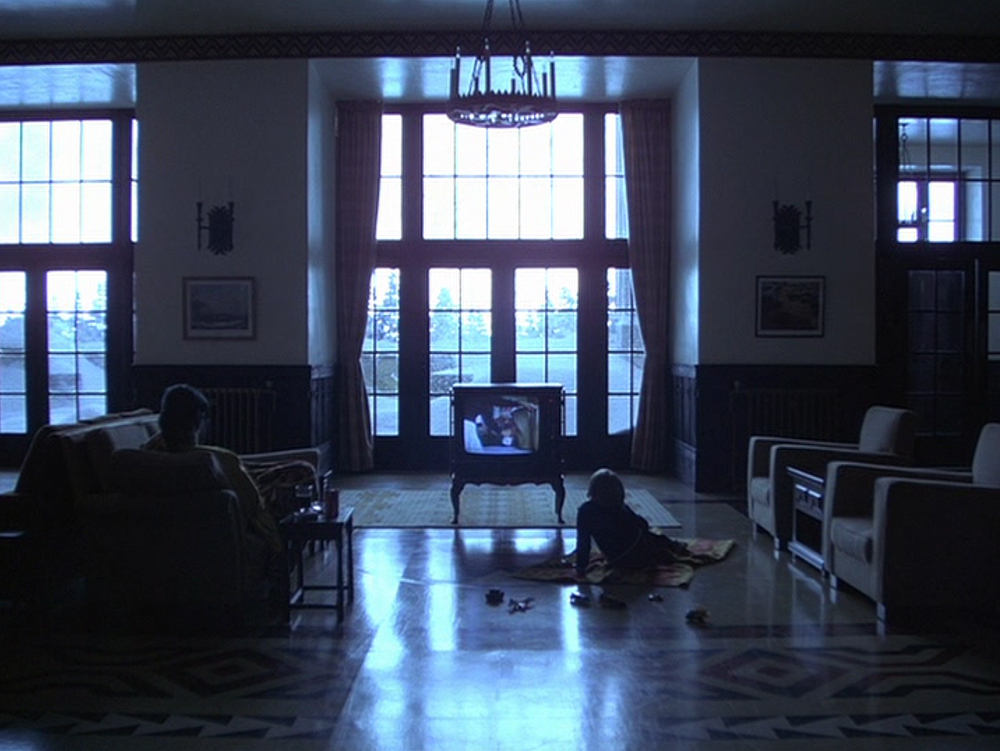
Today in class we distinguished between objectivity and subjectivity.  We looked at a picture of a scene from the movie the shining.   Using mis-en-scene we figured out why the picture looked so creepy and even made the viewer feel cold and quiet. I didn't realize at first that the TV had no antenna or plug to it.  I like how even though I didn't consciously see the absence of a plug or antenna,I noticed it subconsciously which made the picture seem creepy. We concluded that lighting in the picture makes it seem cold because of how blue it is.  After that we figured out that because of a wide shot angle it makes the room seem even bigger and emptier making it seem quiet. To finish off the class we were assigned a 500 word critical writing essay due Friday. We listened to our podcast and then began to work on the essay.
Image result for shining tv room

Tuesday, December 6, 2016

12/05/16 Blog Post - Ben Curras

Today (Monday), most of the students were not here for class. I heard there was a flu that went around the senior class. But for those who were in class, the students reviewed their podcasts on Mr. River’s most recent Google Classroom assignment. In this review, the students gave their fair share of thoughts on how their mini-group podcasting went, how the podcast sounded and more importantly, how the ten minutes taken away from the students, due to the half day on Friday, affected the production and the ability to prepare. In my group, we lost one member, therefore the roles were switched as we had already established an order that seemed to work for all of us. Personally, I spoke of how the different group members changed dynamics in our group and of the things we needed to make up with the loss of our “table mate” and the loss of time itself.  This will help to instruct Mr. Rivers in finding out what he needs to grade you on for other podcasts so that you can show improvement. After that, students were to continue reading their independent reading books for the December 9th podcast.

Abe-Objectivity vs. Subjectivity December 6th 2016

Abe Ancis

December 6th, 2016

Mr. Rivers
Objectivity Vs. Subjectivity

Hello Class the date Is December 6, 2016. Today in class we analyzed the difference between objectivity and subjectivity. We were shown an image from the the film the shining. Mr. Rivers gave us a few moments to analyze the images within our groups to find some characteristics that the scene depicts.Once we Evaluated  the scene by breaking it down, it was time for a class discussion. We found that their are many contributing factors as to why a scene depicts a certain emotion. Some examples are Color, symmetry, lighting and lack of lighting. To further analyze we can clearly see that the scene below is cold and stark. We can also see a television placed in the center of the scene. This placement was purposely done to emphasize the importance of the television itself.

After this we began to correlate Objectivity vs subjectivity to our podcasts.  One might be perplexed as to how we connect objectivity and subject to our podcast, but it's quite simple. Objectivity tends to be the visual focal point while subjectivity tends to be the conceptual, textual, and auditory focal points. We came to the conclusion that in order to have a successful podcast the speaker must be clear and concise. How? By using organized topics, and themes, while connecting them with evidence. In order to have a successful podcast it is imperative to resonate with the audience by showing interest in the topic and conveying inward and outward enthusiasm.

Friday, December 2, 2016

Stephanie Chalef- 12/2/16

So today in class we didn't really do much in terms of learning. We actually recorded our first group podcast with the groups we picked. As usual, the beginning of class was dedicated to writing in our pre-production page and turning it in. We are going to be doing four of the podcasts and this was just the first one. Mr. Rivers checked to make sure everyone had their book, whether it was hard cope or on the computer. We had to figure out what exactly we were going to talk about and who would talk for which parts. Our group in particular wanted to start with music first and an introduction, then after that summarize the movie and the 1/4 of the book we read so the audience (Mr.Rivers) would know what we were talking about when we discussed them. That was just what our group decided to do, but other groups could do what they wanted to make their podcast their own. We had about 10 minutes to do the actual podcast because class was shorter today due to the half day. Considering the time limit, all groups had to be conscious of how much time they had to speak because 10 minutes is how long we are supposed to record for. This podcast was a little harder because we had so much we could do with it, but also, it was more interesting because we were doing it on something each of us picked out, so it may have been more interesting to each person.
                 Image result for podcasts

Wednesday, November 30, 2016

Mikey Botta

Mikey Botta
11/30/2016

Today's Objectives: Understand the formal requirements of a strong film review, and evaluate how a well-written review meets our class goals and formal expectations.

To begin class, we looked at the charts we had created yesterday about the movie reviews we had found (I guess? I was absent yesterday). After analyzing those charts and the goals created on them, we moved forwards with our discussion, and then began to take notes.

For the most part, our notes involved writing a movie/film review. The formal expectations that must be followed are:

  • Deliberately title article: title is the first introduction to the tone/argument of your review.  Title is the last thing that is written. We were shown 3 examples of strong titles. One was "Interstellar - 'science trumps story in latest Christopher Nolan epic'"
  • Credit relevant artists: Who is important? Director, actors?
    You can credit them explicitly by naming them in the article, or credit parenthetically.
  • Provide necessary context: What do we need to know about the film and it’s production? Is it part of a series? Does it reflect a trend? What is happening outside of the film?
  • Summarize Plot: not covered today.
  • Evaluate content: not covered today.
  • Evaluate meaning/theme: not covered today.
  • Conclude: not covered today.
Image result for film review


Monday, November 14, 2016

11/14/16- Claire Vreeland

Today in class we came in, found our computers, and sat down like we do everyday. Instead of working directly with Ready Player One we discussed a more general topic. We discussed the major differences between the topics in literature versus the themes in literature. We established that topics can be very broad and vague in literature or it can be one specific thing shown only once. An example we mentioned in class was that in Wall-E a topic was Old musicals or dancing. This is specific because there is one old musical and one dancing scene, but it is still relevant and important to the movie. But a theme makes a topic relate to a general claim that may refer to not only a specific piece of literature but pertains to the outside world, as well. We used examples from both Wall-E and Ready Player One. An example of this would be that a topic in Wall-E is love. Love is shown in Wall-E and it is one of the topics that is shown more frequently. This topic can be transformed into a theme by saying that Love conquers evil. This claim relates directly to Wall-E but it is general enough to relate it to an outside topic, or a different piece of literature. In Wall-E this theme is expressed through a lot of the movie but specifically at the end when Wall-E is trying to save the plant and ends up injuring himself for Eva and Eva is trying to save Wall-E. Although many believe that topics and themes are interchangeable, they are totally different and express two different spectrums of specificity.

Here is a video that gives a mini lesson on the difference between topic and theme.
https://www.youtube.com/watch?v=GRjEbRhJjgw

Thursday, November 10, 2016

Wednesday November 9th

A little jet lagged from the election our class worked on our private podcasts. Not the ready player one, in which we worked with our table, but the podcast in which we picked our partners, 4 movies and a book. It was actually and assignment given to us prior to this week. We had to find 4 movies and 1 book, with similar connections. Mine for example was Animal house, Caddyshack, Bill and teds excellent adventure, and Happy Gilmore. We chose our book to revolve around the same theme as comedy, it was Steve Colbert's book. It was a pretty slow day and all we did was discuss our books and let Mr. Rivers know what we were reading and watching, we also gave him a name for a podcast because that is the assignment we are doing with each of these pieces. We are reading a a quarter of a the book each week and watching one of the four movies as well. We are then going to podcast about similarities and differences, which is the reason our book needed to have some connections with the movies.
It was hard to do much because for most it was a very long night and was going to be a very long day, so in Mr. Rivers class and honestly within all my classes we kept it simple and easy. Not really doing much work, rather  just planning and getting ready for the work we are going to do in the future.


http://iruntheinternet.com/lulzdump/images/gifs/bill-and-ted-party-on-dudes-future-keanu-reeves-alex-winter-1390432802Y.gif?id=

Have a Triumphant long weekend.

Tuesday, November 8, 2016

Dianna Oelkers

Today in Mr. Rivers class we first grabbed our computers and opened up google classroom. He told us to vote in the SHS election, which was a survey on who you would vote for in the presidential election if you could. After this Mr. Rivers told us to go onto google classroom and click the assignment labeled "Podcast #2 Allusion , Audience, and Ready Player One". In that assignment we  open up the link to the class podcast. On there we had to look at and understand all of the "goals" listed. Then after that we had to pick a podcast to listen, and reflect on. Each student had to go onto the slide where the groups podcast link was and comment on what the group did well (relating to the goals you read before), and comment what they needed to improve on (also relating to the goals).
You had to follow the explicated format when commenting. :
("Episode Title")- (First name, Last Initial) (Period #)- (Goal #) (How did this podcast do the verbs in this goal? Provide/ analyze specific evidence of success). (Goal #) (How can this podcast better achieve this goal? Provide/ analyze specific evidence to support your suggestion)
Then after we commented on a groups podcast, you listened to your own podcast and commented on that. All the expectations on the first commenting were expected within the second one.
Both of these reflections were counted as a formative grade.
We worked on these reflections during the whole class.

Monday, November 7, 2016

Shelby Vermeulen ~ 11 - 7 - 16

Today in class, we created a new podcast for Ready Player One. Mr. River’s informed us that he applied commentary on the google doc that we turned in with our groups. He also recommended that we reflect on the comments that he made as well as our other classmates comments. By looking at the feedback we have and reflecting on our podcast, we can help to continually sharpen and improve our work. Mr. Rivers also recommended that we inform our group of the allusions and references we plan to bring up to create a better flow of conversation. In our groups we can also look at characters names, focus on the music, and/ or look at movies.

Mr. Rivers also proposed the question of:

What do these allusions do? How do they develop plot? Character? Tone? Setting?

For my group, we got some great feedback on our first podcast. We decided to keep our idea of starting off with a song and introducing ourselves. To keep the conversation going we introduce new references and facts that we found interesting.


Image result for podcast picture

Friday, November 4, 2016

Chris makeup

October 31st
   In class today we examined horror clips. we watched them for a couple reasons. The first being that it was Halloween and we were all in the spirit. the second being we were breaking down each clip and seeing what made it scary. As a class we all found similarities between each clip from a horror movie or short film. They all had parts that were silent, like in Black Mirror, when she wakes up it's silent. We also found that in every scene there was a moment when the camera would zoom in and or focus on the main character and blur out the background. We all found this interesting and came to an understanding, that when your focus on the main character it makes it harder for the viewer to see what is going on in the background. This put's the viewer on edge because maybe we something moving, maybe we don't. It allows the mind to wonder and create scary situations. The last connection we made between clips, was there is always an abrupt sound that catches the main characters attention, whether it's aloud bang, a slamming door, books falling or even in the case of Black Mirror a picture being taken. All of these combined is what makes a movie scary, or not so scary for some.
   We also found in the case of David Pumpkins that the mood of each character and the music can change how scary a scene or movie is. On the 100 floors of frights David S. Pumpkins was some guy with skeletons set on  the ride in order to scare people. However, due to the music and the main characters being confused, David S. Pumpkins wasn't very scary.
   As a class we all found it interesting how, even though we know scary movies are fake, they still put fear into our hearts. It's a crazy concept, that when you use all the key indicators, silence, scary music, sounds, and focusing the camera on a person or thing, it can stimulate our body into being scared.
   To sum it all up we broke down clips and found what makes horror movies scary, or no scary for some.

11/4/16 Sarah Veasey

Today in class we further discussed allusion. Allusion means that you are making a reference to something whether it be a book, movie, time period, etc. We also went over Dominant v. Subsidiary audience. A dominant audience is the main thing, we are mostly concerned with them. They are the ones that most author and directors are looking to engage so that they can further understand the piece of media better/fully. Their is also the subsidiary audience. They are more around the main focus, and aren't as important as the dominant audience. They are more of a question of importance.

Mr. Rivers kept asking the question, "Who is the dominant audience for reader player one and who is the subsidiary audience?" That question isn't really a yes or no question, it more a matter of your own opinion based on if you can understand the allusions in the plot line or not.

Today in class we also learned about Specifying Characterization, and considering how they tie in with Wall-E. Relationships such as Auto and the Captain or Wall-E and Hello, Dolly! are both important to this topic because they contrast between hate and love, and understanding and misunderstanding one another. All these understanding help develop the movie and characters because we get a sense of how they operate by themselves and with another character. Another question posed to the class was, "How do allusions specify Wade's character? Aech? Art3mis? Danio? Shoto?" This lead to our final task of the day, looking for allusions in Ready Player One to help with our podcast that we will be recording on Monday (Read all of Level 1 and 2 by Monday!).

Thursday, November 3, 2016

Jack Valentine 11/3/16


Class Summary:

Today in class we began learning about allusions and their effects on film. Mr. Rivers first started with the basics, making sure each student understood the difference between illusion and allusion. Then focusing on the main lesson on allusions, the class learned what exactly allusions do. Finding that allusions reward and define audiences, Mr. Rivers dove deeper into both qualities. First understanding how the audiences gains a sense of reward through a sense of satisfaction, we learned about the various hints that lay in movies. These seem to be hard to pickup on. However, Mr. Rivers brought up various examples from Pixar Films which displayed hints to films that were later released. Next, the class observed how allusions can define the audience. This is done by revoking the jokes in which are set in films that only some of the audience may understand. This is due to the fact that in order to follow the joke or reference, the audience would have to obtain a prior knowledge of an already established piece of work. Finally we learned about the two different kinds of allusions.


11/3/16 Notes

IWBAT- analyze the multi-faceted functions of allusions
  • Apply my understanding of allusions to Ready Player One

Illusion vs Allusion

  • Illusion- like a magic trick
  • Allusion- A reference that is either literary or historical

What do allusions do?
  • Reward/define audience
    • Reward Audience- Satisfaction
      • Humor
Sometimes Subtle “ Easter Eggs”
Ex. monsters inc toy pickup. Nemo hint

  • Honor- Homage
  • Parody
Making fun of something because of their qualities
  • Define Audience- Who should GET these?
    • Is This familiar?
Dominant Audience v. Subsidiary Audience
  • Wall-E: Children’s Film… right?
  • Ready Player One???
  • Specify Characterization
  • ???

Allusions

  • Explicit- names the reference
  • Implicit- implied, not plainly expressed