
Friday, September 30, 2016
9/30/16 Sean Finnegan
Today's class was rather quiet and uneventful with Mr. Rivers being absent we were left to work on our intertexuality essays. After what seemed like a slow start with half of us not even having a book picked out a month ago it seems like everyone has gotten their footing on this project. Most if not everyone has finished their novel and moved on to watching the film adaptation or started pre-writing. Class today was a good day to get organized and start to figure out how our essays are going to look. A good number of students in this period chose to read American Sniper including myself the auto-biography written by the deadliest sniper in American history Chris Kyle. The novel itself spans much deeper into his training and life prior to becoming a Navy Seal than the movie does. Something that is expected to happen with film adaptations but some what surprising considering the amount that is learned about him in the first few chapters of the novel. In all today's class was sluggish with it being Friday and also having a substitute everyone was steadily working but feeling a little drained after the long week. I am confident that everything will pick up again on Monday after everyone goes home and rests for the weekend.


Stephanie Chalef -- 9/30/16
Today in class, since Mr.Rivers was not here we did not really do a lot. Some people are still trying to figure out where to watch their movie, or even trying to find time to read their books. But, most people just watched their movies or read their books for the essay that is due October 13th. Although a lot of people read different books, many students in this period read "Room." That was the book that I chose to read over the Summer. I thought the book was really good, but not the trailer. I honestly thought the trailer went slower than reading the book. But, the movie was actually so good! The movie was very edge of your seat, suspenseful with twists and turns. I can tell that other people liked their movies too. We could not really do anything else because we are focusing on starting the essays. Since it is the first essay we will be writing, this is a chance to show Mr. Rivers our style of writing and find out his style of grading. The essays will be interesting to read due to the vast difference in how each person felt about their books and movies. Today was a slow day in class, but I am sure it will pick up Monday because we are down to two weeks before the essay is due.

Thursday, September 29, 2016
Abe Ancis
9/29/16
Today in class we analyzed the writing rubric for our intertextuality essays using our summer reading book compared to its visual counterpart. The rubric was divided into four categories content, Organization, presentation, Citation, and voice and style. Content is the information being presented using close reading and analysis. Organization is the placement of the information. It is imperative to have good flow. Flow is the ability to connect ideas that support your thesis. Start with the thesis then move to your topic sentence, be sure to have an in depth analysis of your evidence. Voice and style is your word choice, use strong verbs. Use Specific details without losing clarity. Standard MLA format, double space 1 inch margins, 1/2 inch page header size 12 times new roman font, indentations.

9/29/16
Today in class we analyzed the writing rubric for our intertextuality essays using our summer reading book compared to its visual counterpart. The rubric was divided into four categories content, Organization, presentation, Citation, and voice and style. Content is the information being presented using close reading and analysis. Organization is the placement of the information. It is imperative to have good flow. Flow is the ability to connect ideas that support your thesis. Start with the thesis then move to your topic sentence, be sure to have an in depth analysis of your evidence. Voice and style is your word choice, use strong verbs. Use Specific details without losing clarity. Standard MLA format, double space 1 inch margins, 1/2 inch page header size 12 times new roman font, indentations.

Wednesday, September 28, 2016
9/28/16 Jeremy Dericks
Yesterday in class we finished watching the film No Country for Old Men. We left class the previous day after seeing that Llewelyn Moss had been shot and killed. This came as a shock to all of us, and it was very clear that mostly everyone was disappointed. The disappointment continued after we watched how the movie ended. The film was action packed and kept a tight grip on the audiences attention right up until the final scene. In the final scene, the Sheriff was sitting at the table with his wife telling him about his dream and the movie cuts out after the Sheriff says "and then I woke up." Even though it may be extremely disappointing to end such a suspenseful movie in that way, I can admit that I see the point. The point is that the directors did not want to follow status quo and simply have the good guy be a winner and the bad guy be a loser. In the world of Mexican American drug trade, the good guys rarely win--unfortunately. In reality, the odds of some average joe stumbling onto the scene of a drug deal gone bad and walking away with two million dollars and getting away with it highly unlikely. The directors did a great job of holding on to the viewers attention throughout the film through the use of Chigurh's persistence. If Chigurh were to simply give up and let Llewelyn walk away with the money, then the directors would not have succeeded. Yes, some people might have been happier with the ending but it is not always the ending that defines the quality of any work. Even though it is disappointing, it is the disappointment that moves the viewers to talk about it with others. Ending this movie with Chigurh being defeated and Llewelyn being successful would only be predictable and would result in the entire film being just like so many others.


Tuesday, September 27, 2016
9/27/16 Jacey Deleu
During today's class we finished off watching the rest of "No Country for Old Men". Yesterday we all left class wondering if Llewelyn got murdered and if he was really dead. As we continued to watch the rest of the movie we find out that in fact he does die. I thought that the end of the movie was disappointing because it left the audience with many unanswered questions. We didn't find out for sure if Carla Jean was killed by Chigurh. At the end of class we had a discussion about the end of the movie and what we thought about it. One thing discussed was, that in this particular movie the "good guy" dies and the "bad guy" gets away with it. The last time we saw Chigurh in the movie is when he is walking away from the car accident scene and just getting away with everything he has done. To the audience I think that it's frustrating to watch someone who is evil get away with killing so many people but I also wouldn't have wanted the movie to end by Chigurh being arrested because that would make the movie predictable. The last scene of the movie was Sheriff Tom Bell and Loretta Bell talking over breakfast. Once the credits started to roll after that scene everyone seemed to be disappointed because of all the untied ends. Overall, I think that this movie was very creative and intense even though I was disappointed with the ending I wouldn't want it to be changed.

Monday, September 26, 2016
9/26/16- Tom D'Ascoli
Today in class we watched "No Country for Old Men." We started watching from where left off, when Llewelyn was walking across the American-Mexican border after his last battle with Chigurh. By the end of the period we were to submit a strong sentence into Google classroom discussing certain elements of mis-en-scene that we individually picked out as we were watching. What jumped out to me in the film is how psychopathic Chigurh is. A man offered him the 2 million dollars he was hunting plus an extra $14,000 and instead he chose to kill the man. The movie took a major twist when we found out Llewelyn gets killed in the movie.

https://youtu.be/sqSCYrgQI2w
https://youtu.be/sqSCYrgQI2w
Thursday, September 22, 2016
Stephanie Chalef-- 9/22/16
Today in
class we started out talking about the book chats that happened yesterday. We talked
about what worked, what did not and how everyone felt about it. Mr. Rivers gave
us time to discuss in our groups and then share with the class. The response
was mostly negative, not many people liked the book chats. Some things
mentioned by classmates were that there were too many people in one book chat,
too many activities going on, and no one wanted to read the books. The only
positive response to the book chat was that a room of twenty-five students with
a couple a teachers was a good size to host the book chat. After this, we
started watching the movie “No Country for Old Men” from where we left off
yesterday. The scenes were very intense and sometimes a little confusing. In
order to make sense of it and to make sure everyone pays attention; Mr. Rivers
has us typing a strong sentence onto Google classroom, using the questions why
and how. Every day everyone is to add another sentence under their previous
one. This is reinforcing the concepts of the questions how and why. We will
continue watching the movie and looking for the outcome of those questions.
Wednesday, September 21, 2016
9/21/16
Mikey Botta
September 21
Today's Objective: Basically the same as yesterday-- Analyze intertextuality of complex texts.
September 21
Today's Objective: Basically the same as yesterday-- Analyze intertextuality of complex texts.
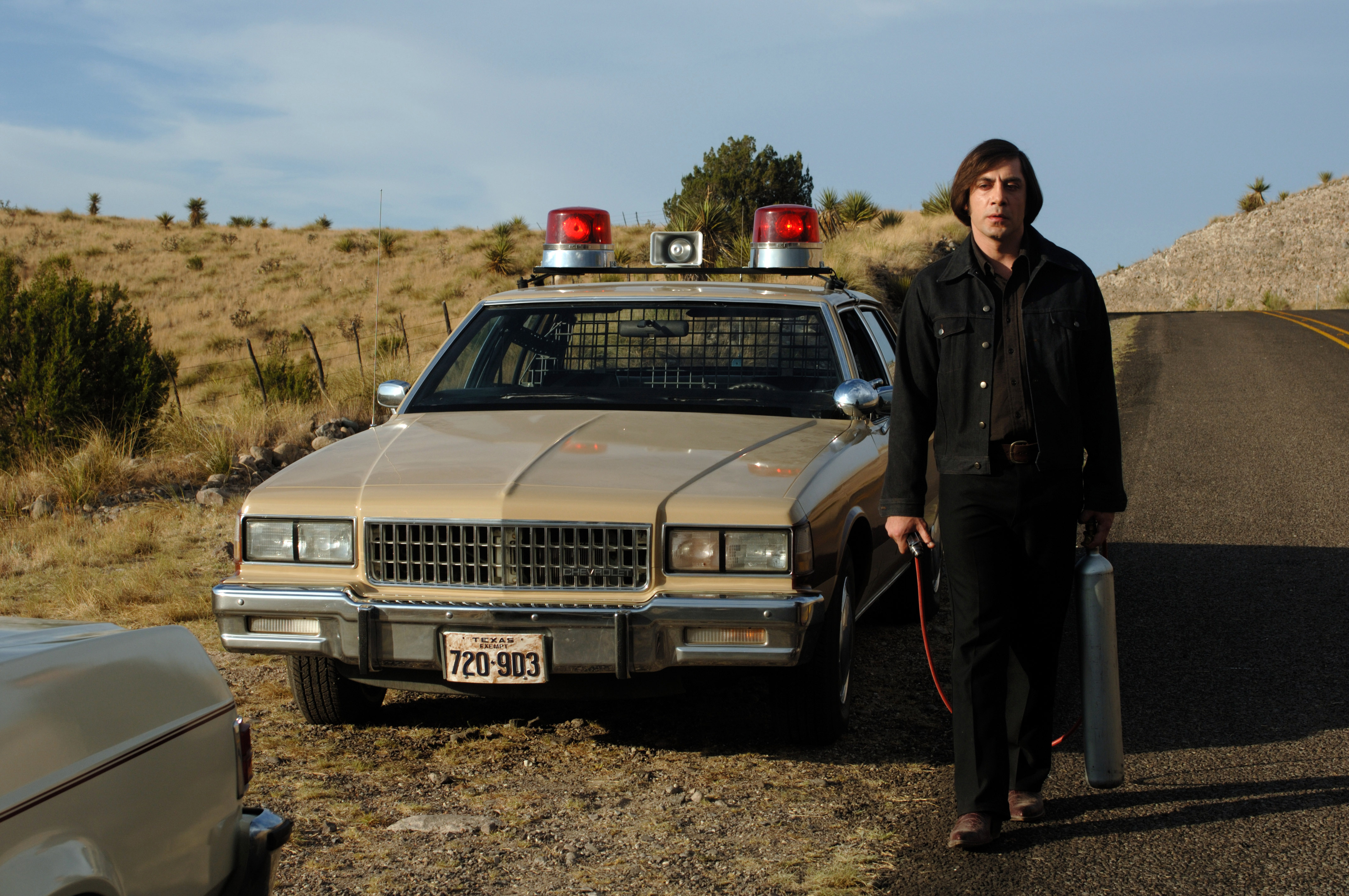
Today in class, we took a more in-depth analysis of intertextuality. In particular, we began to compare and contrast the content found in the text version and film version of "No Country for Old Men." Half of the class watched the first scene of the film and looked for things that were also found in the text (front half of the class), while the other half of the class looked for things that were not in common between the book and the film (back half of the class).
After we had watched some of the movie, we went ahead and posted a sentence that summarized our findings on Google classroom in response to a classmate. One example is from Steph Chalef, who typed "The movie scene shows the same scene, where Chigurh is choking deputy by strangling him. There is a parallel between the book and the movie." As you can tell, it is pretty simple-- you simply had to find something in common (or in contrast) between the movie and film and describe it. The image below is from the film we began watching; this scene in particular was in both the film and text.

Tuesday, September 20, 2016
Abe Ancis
9/20/16
Today in class we analized intertextuality through complex text. Intertextuality is the relationship between texts. To analyze text we must determine the relationship. we ask questions such as what is happening and how is it happening. The WHAT, referring in a literary aspect is the content itself such as descriptive words and context clues. In film the WHAT would be the visuals themselves. The HOW is the form in which it is being conveyed to emit a specific emotion to the audience. The WHAT and HOW intertwine to create what is known as MIE-EN-SCENE. Once the class overviewed the basics of the WHAT and HOW we were given a piece of text. This text was titled "No Country for Old Men" and was written by Cormac McCarthy. After reading the text we were given a question. What is the doing and how is it doing? I came to the conclusion that the narrators intention was to emit a feeling of chaos and confusion by switching characters throughout the text.

9/20/16
Today in class we analized intertextuality through complex text. Intertextuality is the relationship between texts. To analyze text we must determine the relationship. we ask questions such as what is happening and how is it happening. The WHAT, referring in a literary aspect is the content itself such as descriptive words and context clues. In film the WHAT would be the visuals themselves. The HOW is the form in which it is being conveyed to emit a specific emotion to the audience. The WHAT and HOW intertwine to create what is known as MIE-EN-SCENE. Once the class overviewed the basics of the WHAT and HOW we were given a piece of text. This text was titled "No Country for Old Men" and was written by Cormac McCarthy. After reading the text we were given a question. What is the doing and how is it doing? I came to the conclusion that the narrators intention was to emit a feeling of chaos and confusion by switching characters throughout the text.

Monday, September 19, 2016
sample blog-Terrell Smith
I have learned a lot about mise-en-scene in the the last couple days of class. I have learned that a lot of thought is put into the creation of film. Everything that is shown on screen has a reason/ purpose for being there. Where ever a character is standing in the frame they are there so you can focus on the character or the objects around the character. Also I now know the difference between diegetic and nondiegetic audio. Diegetic is when the characters in the film and the audience can hear something going on in the movie. Non diegetic is when only the audience can hear a noise. For example when danger is approaching the character the audience will hear the music, while the character does not hear the music. If the character heard the music he probably would not continue to walk in the direction where he is headed. Non -diegetic audio will also help the audience imply what's going to happen next . The lighting in shot frames are very important. The lighting will emphasizes a character appearance, and tell a lot about who the character is. If there is a lot of light on a character it will usually mean it’s protagonist. If the character is dark and shady it will usually mean he’s an antagonist. Subsidiary Features also adds to the film. Subsidiary features adds to film, because those people or objects may not be the most important like the dominant feature but adds to the the shot.
Our Class Blog
Hey, Gang!
Welcome to our class blog. I realize that it looks pretty empty right now, but that's where YOU come in! You will be responsible for filling this blog with quality writing! Someone in our class will be responsible for posting a blog by 10pm EACH NIGHT!
A Quality Blog...
Welcome to our class blog. I realize that it looks pretty empty right now, but that's where YOU come in! You will be responsible for filling this blog with quality writing! Someone in our class will be responsible for posting a blog by 10pm EACH NIGHT!
A Quality Blog...
- Reflects on the work that we have done in class that day (including objectives and inquiries)
- Uses titles, paragraphs, and stylistic choices to compose a clear and specific account of our day
- Draws in SPECIFIC examples from individual experiences/activities (including your first name and last intial (e.g. Bilbo B.)
- Includes some form of media (image, YouTube video, etc.) that connects to what we talked about in class
FINE PRINT:
Your blogging will make up your entire homework grade. Each post will be worth 5 points for its ability to accomplish the objectives above. Blogs posted after 10pm on the day they are due will lose 1 point, and after midnight they will lose 2. Please be proactive with the schedule; if you have to work on Thursday and are scheduled to post on Thursday, then talk to another student (AND ME) about switching spots on the official calendar. Please make sure that you post in the proper class. Don't forget to click PUBLISH!
To login and post your blog, follow the instructions on the YouTube video.
Subscribe to:
Posts (Atom)